Areni and Voskehat: A Portrait of Armenia’s Two Principal Grape Varieties
For the first time in its history, the Concours Mondial de Bruxelles | CMB is setting up in Yerevan. From 21 to 23 May 2026, the Armenian capital will host the prestigious Red and White Wines Session, and the Sparkling Wines Session. An unprecedented encounter between one of the vine’s oldest cradles and the pinnacle of international wine judging.
Two Varieties, One Ancient Terroir
Some grape varieties come from elsewhere and gradually come to belong to a place. Others have never belonged anywhere but one because they were born there, shaped over millennia by its soils, its stones, its altitude.
To understand what these varieties are, you first need to understand where they grow. Basalt, tuff and obsidian soils, volcanic residue transformed into exceptional growing ground. Vineyards suspended between 600 and 1,800 metres above sea level, among the highest in the world. Over 300 days of sunshine a year, tempered by cool mountain nights that slow ripening and preserve natural acidity. And vines often ungrafted, still growing on their own original rootstock.
Areni: precision and elegance
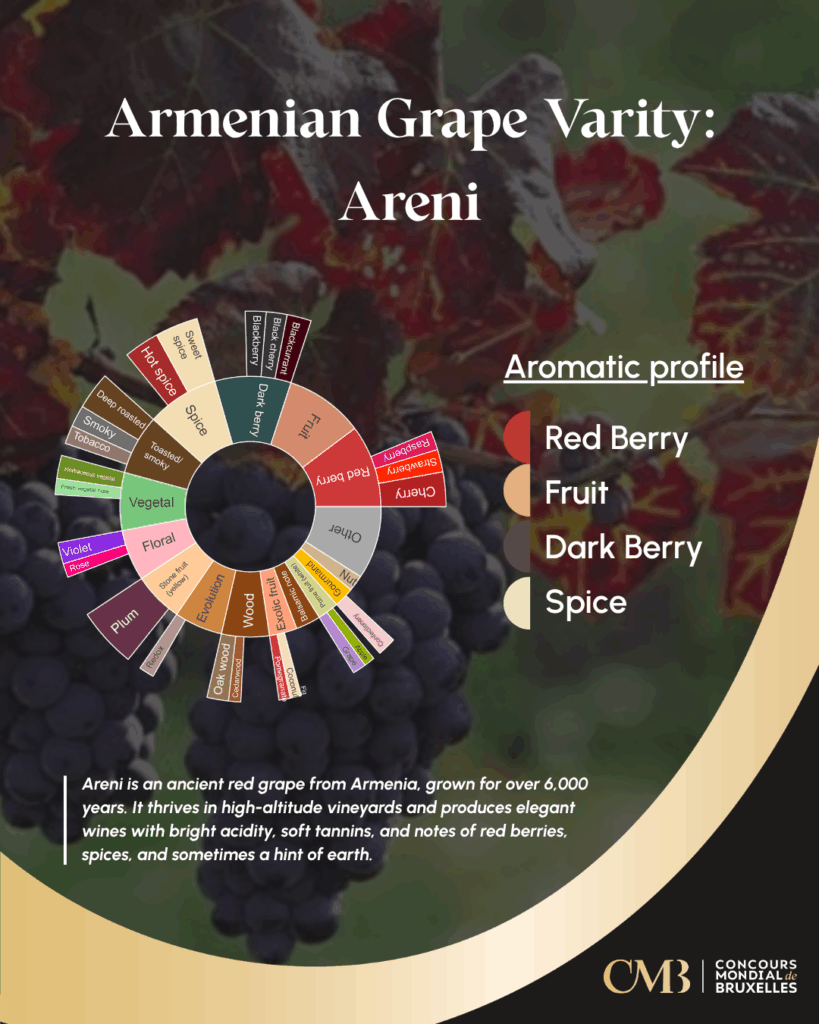
Areni is Armenia’s emblematic red grape variety. It is described as precise, lifted and structured carrying the imprint of altitude and volcanic rock, with an arresting elegance and real ageing potential.
Its name is also that of a cave. In 2007, archaeologists excavating the Areni-1 site in southern Armenia uncovered the oldest known winery in the world: a fermentation vat, a pressing trough, and karases buried in the ground all dating back to around 4,100 BCE.
Voskehat: Generosity and Structure
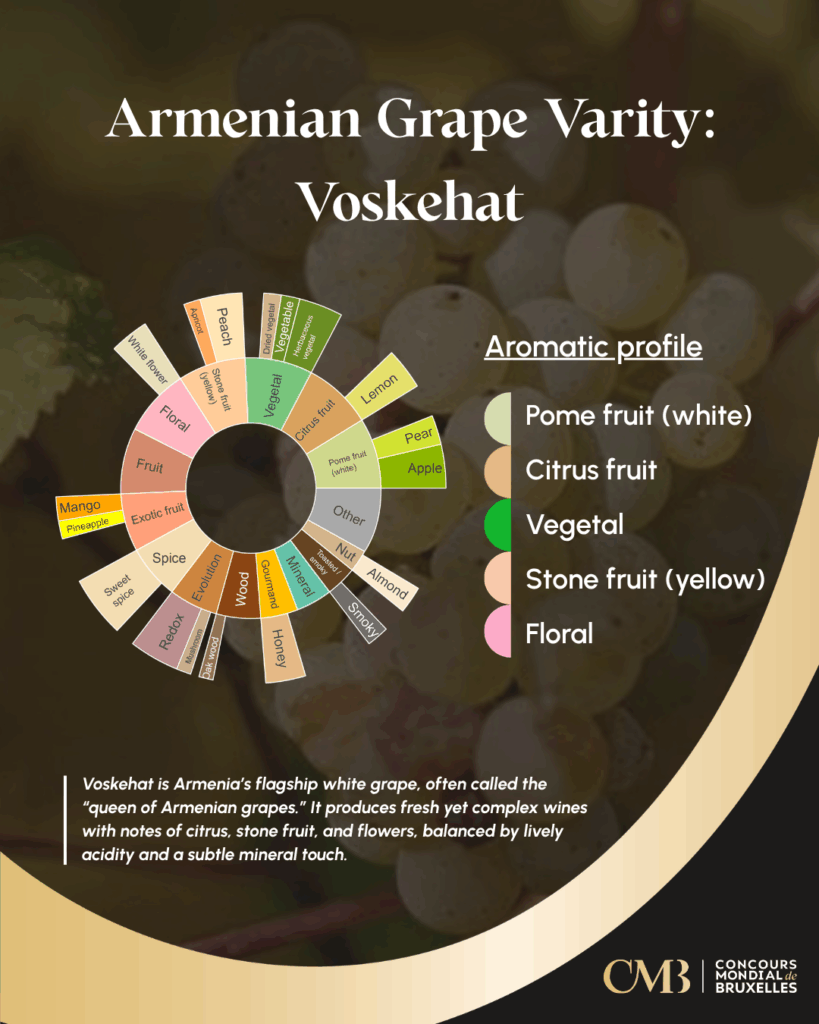
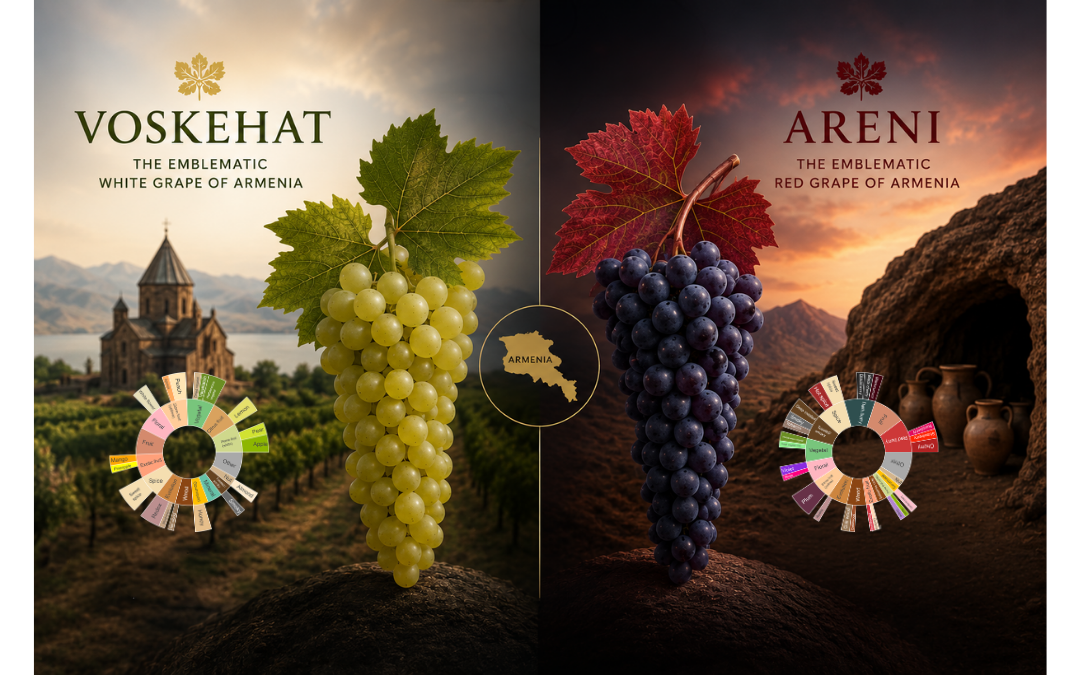
If Areni is the voice of Armenia’s red wines, Voskehat is its white counterpart. Generous yet structured, it offers Armenia’s most accomplished white expression, textured and with a depth that rewards patience.
Like Areni, it grows in a challenging environment. This is precisely what Armenia’s indigenous grape varieties share: they do not soften in the face of these conditions, nor do they drift. They preserve, vintage after vintage, their intact personality.
A heritage of 450 varieties
Areni and Voskehat do not stand alone. They are part of a geographical heritage encompassing more than 450 autochthonous and indigenous varieties, including Khndoghni, Lalavari, Garan Dmak, Kakhet (also known as Milagh), Kangun and Haghtanak. One of the richest and most ancient viticultural legacies in the world, in a country that scientists consistently identify as one of the birthplaces of Vitis vinifera domestication.
Rima Abrahamyan